
Labs and Institutes
Labs and Institutes
Our faculty partner with leaders across campus and around the world to develop innovative and interdisciplinary solutions to issues across a range of sectors
Institutes
Our faculty lead or work with a wide range of institutes and programs across the university.
Data and Artificial Intelligence
Trustworthy AI Initiative. GW TAI, a pan-university initiative focused on trustworthy AI in systems and for society, serves as an engine of impact-focused interdisciplinary research, preparing resilient leaders and amplifying GW’s role as a global convener.
Institute for Trustworthy AI in Law & Society. TRAILS integrates artificial intelligence participation, technology and governance during the design, development, deployment and oversight of AI systems; TRAILS investigates what trust in AI looks like, how to create technical AI solutions that build trust, and which policy models are effective in sustaining trust.
Program in Designing Trustworthy AI Systems. DTAIS conducts research and education to design AI/ML-enabled trustworthy complex systems.
Institute for Data, Democracy, and Politics. IDDP helps the public, journalists, and policymakers understand digital media’s influence on public dialogue and opinion, and develop solutions to disinformation and related ills.
Disasters, Sustainability, Food, and Health
Environmental and Energy Management Institute. EEMI conducts cross-cutting research, education, and service in the rapidly expanding environmental and energy sectors of the U.S. and throughout the world
Initiative for Crisis, Disaster, and Risk Management. ICDRM blends academic and practical expertise to tackle issues related to emergency management and crisis management, systems development, and systems operation.
Global Food Institute. Powered by interdisciplinary research and teaching across policy, innovation, and humanity, the Global Food Institute at GW works to transform people’s lives and the health of our planet.
Humanitarian Action Initiative. HAI supports scholarship and policy engagement on humanitarian assistance, through research, events, and relationship building.
Behavioral Research Insights & DiGital Health Technology (BRIGHT) Institute. The BRIGHT Institute supports research on digital health technologies and their application to public health, promoting healthy behaviors, and preventing disease.
Systems Engineering
Systems Engineering Research Center. The SERC is a network of 25 universities sponsored by the Office of the Under Secretary of Defense for Research and Engineering and other entities in the Department of Defense to develop actionable solutions to complex challenges facing national security.
Facilities
The EMSE department hosts specialized facilities for systems engineering, in addition to computer labs across campus.
- Model-Based Engineering Lab. The MBE lab provides students with hands-on experience applying modern model-based engineering practices to complex, real-world systems.
Faculty Research Labs
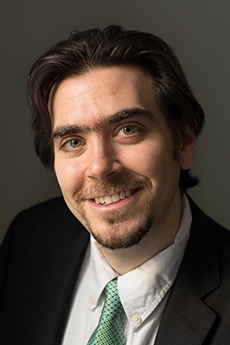
Decision-Making and Systems Architecture Laboratory, led by Prof. David Broniatowski
Dr. Broniatowski, Director of the Decision Making and Systems Architecture Laboratory, conducts research in decision making under risk, group decision making, the design and analysis of complex systems, and behavioral epidemiology. This research program draws upon a wide range of techniques including formal mathematical modeling, experimental design, automated text analysis and natural language processing, social and technical network analysis, and big data. His work on systematic distortions of public opinion about vaccines on social media by state-sponsored trolls has been widely reported in the academic and popular press.
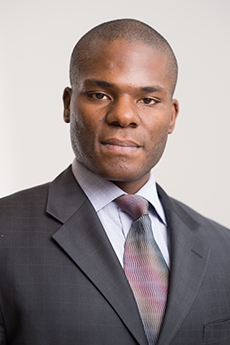
Strategic [Urban] Ecologies, Engineering, and Decision-Making, led by Prof. Royce Francis
Dr. Francis’s group conducts research in engineering education and infrastructure management, including sustainability assessment and risk analysis; regulatory risk assessment and policy-focused research, especially for environmental contaminants and infrastructure systems; and, statistical/mathematical modeling approaches to decision support.
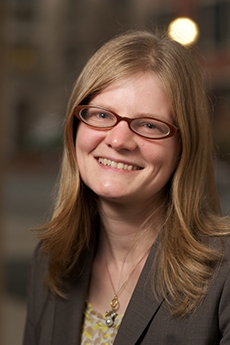
Gralla Research Group, led by Prof. Erica Gralla
The Gralla Research Group studies decision-making in real-world contexts, including disaster response operations and systems engineering and design, using methods from systems engineering, operations research, and management.

Technology Change Lab, led by Prof. John Helveston
The Technology Change Lab conducts interdisciplinary research that explores relationships between technological change and factors that shape it, such as consumer behavior, market dynamics, and policy. We apply a systems engineering perspective to better understand these relationships and to inform policy, with an emphasis on accelerating transitions to cleaner technologies.
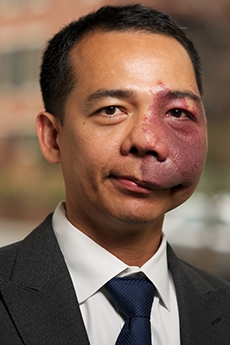
Santos Research Group, led by Prof. Joost Santos
Dr. Santos conducts research in the domains of systems engineering, risk analysis, and economic input-output analysis for managing disaster consequences on interdependent infrastructure networks and economic systems. His team was involved in FEMA’s “Mitigation Saves” project, which has been cited by The US Congress “Promoting Flood Risk Mitigation Act” (H.R.5846).
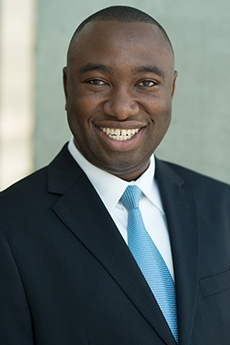
Systems Modeling Laboratory for Economic Decisions (SysMoLED), led by Prof. Ekundayo Shittu
SysMoLED conducts research at the interface of systems engineering and engineering management with an emphasis on thematic areas including modeling of systems interdependence, mathematical programming and optimization, technology management, the economics of environmental change and technology policy.
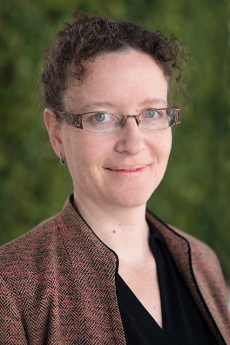
SzajnLab, led by Prof. Zoe Szajnfarber
The SzajnLab research group studies the design and development of complex systems, primarily in the aerospace and defense sectors. Their work is deeply empirical and considers both the organization and technical system architectures to “design-in” an ability to achieve performance goals across extended and highly uncertain operational lifetimes. Recent projects examine the nature and function of scientific and technical expertise in the design process, particularly in the context of open innovation.
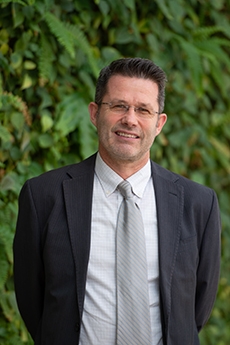
Van Dorp Research Group, led by Prof. Rene van Dorp
General themes have been the development of formal methods integrating expert judgment, distribution theory, available data and Monte Carlo methods/simulation. Applied research domains of special interest include: maritime risk assessment and management, probabilistic risk assessment, reliability analysis, expert judgment elicitation, statistical dependence modeling, and engineering uncertainty analysis.
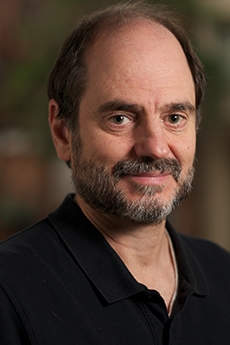
Abeledo Research Group, led by Prof. Hernan Abeledo
Research interests lie in the development of mathematical models and algorithms for optimization problems encountered in various activities such as health care, logistics, and environmental protection. Recent projects include the optimization of cancer treatment planning, vehicle routing problems, scheduling of health care workers, and reducing rainforest deforestation.
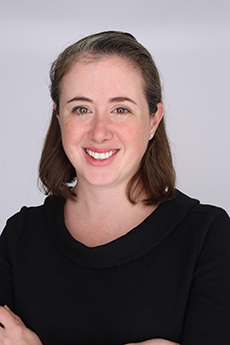
FEWs Lab, led by Dr. Caitlin Grady
At FEWsLab, we investigate interconnections across food, energy, and water systems. Our lab combines Systems modeling, Socio-technical data, Ethical and policy analyses. We aim to foster a more economic, sustainable, and secure environment, balancing fundamental research with practical policy insights.